Why LinkedIn Is Now the Most Important Visibility Platform for Professional Services Firms

Updated: Sep 15

A few years ago, if someone had asked me what the most important marketing asset was for a professional services firm, I would probably have said its website. Today, I am no longer so certain.
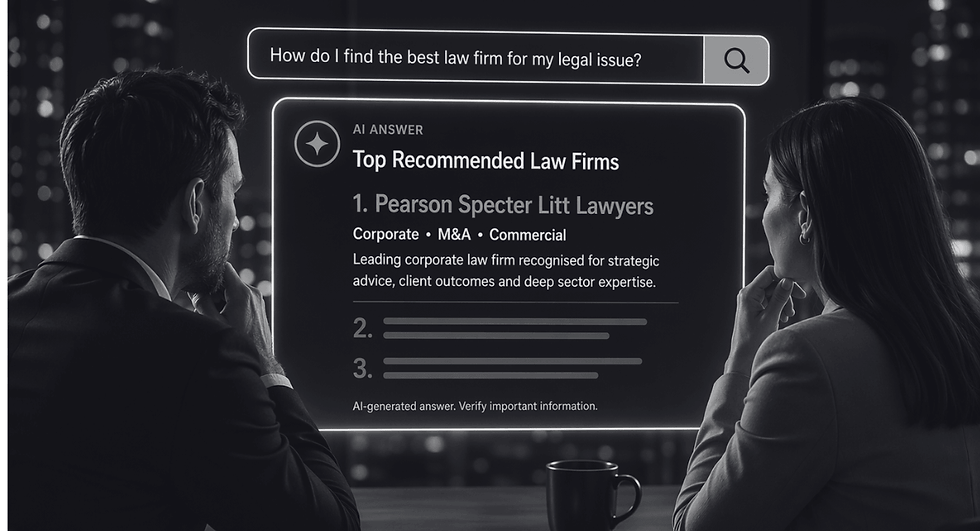
Firms now have many more digital assets competing for attention, and traditional search behaviour is evolving rapidly as more people begin using AI-assisted search tools alongside Google and Bing. The way prospective clients research advisers and professional service providers has shifted significantly over the past few years.
However, I would argue that LinkedIn has become one of the cornerstones of professional services visibility. While many discussions focus on individual profiles, a strong and active company presence plays an equally important role. Together, they create a digital footprint that helps prospective clients understand who you are, what you do, and whether you are worth speaking with. In many ways, LinkedIn is now more influential than a firm's website when it comes to creating that crucial first impression.
That might sound like a bold statement, particularly when firms invest significant amounts of money developing websites, refining service pages, commissioning videos and producing thought leadership. Yet when I think about the way prospective clients now research advisers and professional service providers, LinkedIn repeatedly appears at the centre of the process. Even in many traditional searches, LinkedIn profiles and company pages are often cited ahead of firm websites in Google and Bing results.
Over the past few years, I've become increasingly interested in what I call the "visibility gap". It is something that emerged repeatedly while reaching out to contributors for our Visibility Gap eBook and through countless conversations with professional services firm leaders. The visibility gap is not about capability, because most firms I speak with are genuinely good at what they do. Instead, it is the gap between being highly capable and being visible enough for prospective clients to discover, understand and remember your expertise.
Being visible in today's market is harder than ever. With so many firms, advisers and experts all competing for attention online, standing out from the crowd has become increasingly challenging. Simply being good at what you do is no longer enough. Prospective clients need to be able to find you, understand your expertise and see evidence of your credibility before they are likely to engage.
One of the biggest misconceptions I encounter is the belief that good work will naturally lead to visibility. We all want to believe that excellent client service, strong technical knowledge and positive outcomes will inevitably generate attention. Unfortunately, that is no longer how the market works.
I've worked with firms that have exceptional expertise in highly specialised areas, yet outside their existing client base they remain largely invisible. Meanwhile, competitors with no greater, and sometimes even lesser, technical ability appear to dominate industry conversations, attract speaking opportunities, generate referrals and receive a disproportionate share of attention.
Put simply, if the market doesn't know you exist, it becomes very difficult to win new work and grow your client base. While that may not have an immediate impact on this year's figures, over the longer term your firm becomes vulnerable to changing market conditions, increased competition or a decline in your existing client base.
The visibility gap is real.
Referrals Haven't Disappeared. They've Evolved.
One of the things I have noticed over the past decade is that referrals remain just as important in professional services as they have ever been.
In fact, if I think about many of the strongest firms I have worked with, referrals still sit at the heart of their business development strategy. Existing clients continue to introduce trusted advisers. Strategic partners continue to recommend firms they respect. Professional networks continue to generate opportunities. None of that has changed. What has changed is what happens after the referral is made.
Twenty years ago, a recommendation from a trusted colleague may have been enough to prompt a phone call, arrange a meeting or secure a place on a shortlist. Today, that same referral is far more likely to trigger a research process.
Before making contact, many prospective clients will do their homework. They will look at your website. They will search for your firm online. They will review your LinkedIn profile, examine mutual connections, read any articles they can find and look for evidence that supports the recommendation they have received.
In many ways, a referral no longer finishes the business development process. It starts the due diligence process.
This is particularly important in professional services because clients are often buying expertise that they can't easily assess themselves. Most clients are not qualified to determine whether one lawyer is technically better than another. They may not be able to evaluate the finer points of an accountant's technical capability or a consultant's methodology. Instead, they look for signals that help them build confidence in their decision.
Most prospective clients are simply looking for reasons to feel confident in their decision. They want to know that you understand their industry, appreciate the challenges they face and have helped others navigate similar situations. They are looking for evidence of expertise, practical experience and sound judgement. In short, they want reassurance that they are dealing with someone they can trust and someone who will be a safe pair of hands. Increasingly, they are gathering much of this information before they ever make direct contact. If your LinkedIn profile, your firm's company page and the content you share are not helping to communicate these qualities, then your visibility gap is likely to be wider than you realise.
This is one of the reasons I believe visibility has become far more than a marketing issue. Visibility now plays an important role in business development, client acquisition and long-term growth. The firms that consistently make their expertise visible create trust long before they enter a pitch process or proposal discussion. Those that remain largely invisible may never even make it onto the shortlist.
That is why the visibility gap matters so much. It is not simply about being seen. It is about being considered.
LinkedIn for Professional Services firms: The New Due Diligence Platform
If referrals increasingly trigger research rather than immediate contact, the obvious question becomes: where are prospective clients conducting that research?

While websites remain important, I believe LinkedIn has quietly become one of the primary due diligence platforms for professional services firms. When someone receives a referral, attends a conference, hears you speak at an event, reads an article you have written or is introduced through a mutual connection, LinkedIn is often one of the first places they visit.
Think about your own behaviour. When someone is recommended to you, there is a good chance you will look them up online before making contact. If they are active on LinkedIn, you can quickly gain a sense of who they are, what they do, who they know, what they care about and whether they appear credible in their chosen field.
For professional services firms, this is particularly important because clients are not simply buying a service. In most cases they are buying expertise, judgement and trust. They want confidence that the person sitting across the table understands their challenges and has the experience needed to help them achieve the outcome they are seeking. LinkedIn provides an opportunity to demonstrate those qualities long before the first conversation takes place.
A well-developed profile, a strong company page and a stream of relevant content can collectively tell a story about your expertise. They allow prospective clients to see what issues you are talking about, what industries you work with, what perspectives you bring and how engaged you are within your profession. In many respects, LinkedIn has become an extension of your reputation.
This is one of the reasons I believe LinkedIn is more important than many firms realise. While websites are still essential, they are often relatively static. Many visitors will spend only a few minutes on a website before leaving. LinkedIn, however, provides a much richer picture. It allows people to view not only your credentials but also your activity, insights, network and visibility within the market.
I have lost count of the number of times I have spoken with a professional services practitioner who tells me they receive very little engagement on LinkedIn, only to discover that prospective clients regularly view their profile, read their content and consume their insights without ever pressing the like button or leaving a comment.
One of the great misconceptions about LinkedIn is that success is measured by visible engagement. While likes and comments can be useful indicators, they rarely tell the full story. The real value often comes from the people who are quietly observing, assessing and building confidence in your expertise before eventually getting in touch.
That brings me to one of the biggest mistakes firms make on LinkedIn.
The Biggest Mistake Firms Make on LinkedIn
One of the biggest mistakes I see professional services firms make on LinkedIn is believing that success comes from posting more content.
As a result, considerable effort is often invested in producing articles, company updates, award announcements, staff promotions and event photographs. While there is nothing inherently wrong with this type of content, much of it does little to help a prospective client understand why they should engage your firm rather than one of the many others competing for their attention.
This is not an activity issue. Anyone can post relentlessly on LinkedIn. In fact, with the emergence of AI tools, it has become easier than ever to generate an endless stream of content. The reality, however, is that activity alone does not create visibility, credibility or trust. If it did, every professional who posted every day would be winning more work.
The firms and individuals who gain the most value from LinkedIn tend to take a different approach. Rather than focusing on volume, they focus on relevance. They share meaningful content that speaks directly to the challenges their clients are facing and provides practical insights to help them navigate those issues. They use their experience to add perspective, not simply add noise.
This is where many firms get LinkedIn wrong. They become focused on what they want to talk about rather than what their clients want to hear. They talk about themselves, their achievements and their services when they should be talking about industry developments, emerging risks, market trends and the issues keeping their clients awake at night.
The content that clients engage with and remember is rarely the most polished or the most frequent. More often, it is the content that demonstrates an understanding of their world and helps them think differently about a challenge they are facing. When done consistently, that type of content helps build familiarity, credibility and trust long before a business development conversation ever takes place.
Expertise Travels Further Through People Than Logos
While a strong company page is important, one of the realities of professional services is that people tend to connect with people before they connect with brands.

Think about the advisers or people you follow online. Chances are it is not because they work for a particular law firm, accounting practice or consultancy. More often, it is because they consistently share useful insights, contribute to industry conversations and demonstrate an understanding of the issues that matter to you. The same applies to your clients.
When prospective clients are researching professional services firms, they are rarely evaluating the organisation in isolation. They are also assessing the people behind it. They want to know who they will be dealing with, whether that person understands their challenges and whether they appear credible, approachable and knowledgeable. This is where personal branding often gets misunderstood.
Unfortunately, the phrase "personal brand" can create the impression that people need to become influencers, aggressively self-promote or constantly talk about their achievements. In my experience, the opposite is true. The strongest personal brands are usually built by professionals who consistently share useful knowledge, contribute to discussions and demonstrate genuine expertise over time.
A personal brand is simply what people think of when they hear your name. That presents a great opportunity for all professionals. Unlike a corporate brand, which is often shaped by many different people and influences, your personal brand is largely within your control. Through the way you participate on LinkedIn, the insights you share and the conversations you contribute to, you have an opportunity to shape how your target market perceives you.
In reality, the key question is whether you are actively helping to shape that perception or leaving it entirely to chance.
For professionals, personal branding is really about becoming known for something. It might be a particular area of technical expertise, a specific sector, a type of client challenge or even an approach to helping clients achieve results. The clearer that association becomes, the easier it is for clients, referrers and professional contacts to think of you when opportunities arise.
One of the interesting things about LinkedIn is that it allows professionals to demonstrate expertise in small, consistent ways. You do not need to publish lengthy articles every week or become a full-time content creator. Sometimes a thoughtful comment on an industry issue, a practical observation from a client conversation or a useful piece of third-party content can reinforce what you want to be known for. Over time, these seemingly small actions accumulate and begin to shape how your network, your clients and your broader market perceive your expertise.
This is where LinkedIn creates a significant advantage. Every article you share, every comment you make and every insight you provide contributes to the story people build about your expertise. Over time, these small interactions create visibility and familiarity. They help people understand not only what you do, but how you think.
I've lost count of the number of conversations I've had with professionals who tell me they don't feel they have anything worth posting on LinkedIn. Yet when I sit down with them and ask about the conversations they have had with clients during the previous week, they can often provide a dozen useful insights within a matter of minutes. The challenge is rarely a lack of expertise. More commonly, it is a lack of confidence in sharing it.
The firms that do this particularly well understand that visibility is not the responsibility of the marketing team alone. They recognise that their greatest asset is the collective expertise of their people. Rather than relying solely on company content, they encourage professionals across the firm to share insights, contribute perspectives and engage with their networks in a way that feels authentic to them.
The result is often far more powerful than any corporate marketing campaign. A firm's company page can tell people what the firm does. Its people demonstrate how that expertise is applied in the real world. Together they create the type of visibility that prospective clients find both credible and memorable.
This is also why sharing and supporting the content of colleagues can be so valuable. When professionals within a firm engage with each other's insights, they amplify expertise across the organisation, broaden reach and increase visibility. More importantly, they create multiple pathways for prospective clients to discover the firm's collective knowledge and experience.
In many ways, this is where LinkedIn becomes far more than a social media platform. It becomes a way of making expertise visible at scale. It allows the knowledge that already exists inside a firm to reach clients, prospects, referrers and networks who may never otherwise encounter it.
And in a market where visibility has become increasingly difficult to achieve, that matters. Because expertise that remains hidden cannot build trust, generate conversations or create opportunities. Expertise needs to be visible before it can become valuable from a business development perspective.
What AI Means for Visibility
No discussion about visibility, or indeed anything at the moment, would be complete without touching on the impact of AI.
Over the past couple of years, I have spoken with many professionals who are concerned that AI will fundamentally change how clients find advisers and professional service providers. In many ways, that concern is justified. More people are now using AI-assisted search tools to research problems, identify potential providers and gather information before making purchasing decisions.
What is interesting, however, is that AI does not remove the need for expertise. If anything, it increases the importance of making expertise visible.
AI tools can only work with the information they have access to. If your expertise is hidden, rarely published, difficult to find or poorly articulated, AI platforms will have very little evidence to draw upon when presenting answers or recommendations. On the other hand, professionals and firms that consistently share insights, publish articles, contribute to discussions and demonstrate expertise create a much stronger digital footprint. Technology may change the way people discover expertise, but it does not change the fact that expertise needs to be visible before it can be discovered.
This is where the concept of the visibility gap becomes even more relevant. Historically, a firm could remain relatively unknown online and still generate a healthy stream of opportunities through referrals and networking. Today, being invisible online is becoming a greater risk because both people and technology increasingly rely on digital signals when assessing expertise.
That doesn't mean firms need to flood LinkedIn with AI-generated content. In fact, I would strongly caution against it.
One of the risks created by AI is that it has become easier than ever to produce large volumes of content that say very little. We are already seeing countless generic articles, posts and opinions being published every day. While this may increase activity, it does very little to build credibility.
Your clients and prospective clients don't want to wade through more content. Instead, they want valuable content and updates that speak to their issues and provide practical options or ideas that they can understand. They want to learn from people who have experience, insights and perspectives that help them navigate challenges and make better decisions.
In many respects, AI is making authentic expertise more valuable, not less valuable. As more generic content floods the market, genuine insights, personal observations and practical experience become easier to recognise and more memorable.
For professional services firms, that presents a significant opportunity. The firms that will benefit most from AI are unlikely to be those producing the greatest volume of content. They will be the firms that use AI to support their visibility efforts while continuing to share authentic expertise, build relationships and demonstrate real-world experience.
People may use technology to discover expertise, but they still choose to work with people they trust.
Closing the Visibility Gap
Take a step back and look at the way prospective clients are now searching for professional services advisers. Referrals still matter. Relationships still matter. Technical expertise still matters. However, the way people discover, validate and engage with that expertise has changed significantly. Long before a prospective client picks up the phone, sends an email or agrees to a meeting, they are often conducting their own research. They are looking for signals that help them understand who you are, what you do and whether you might be the right person to help them.
Increasingly, LinkedIn sits at the centre of that process. It has become a trusted source of information for many professionals. Most people operating in the B2B environment are on LinkedIn every day, whether they are actively posting or simply consuming content. It has become a key visibility platform for professional services firms and the individuals within them.
However, that does not mean every professional needs to become a content creator, nor does it mean firms need to post endlessly simply to remain visible. Effective visibility is not about activity for activity's sake. It is about relevance. It is about helping your target market understand your expertise, your perspective and the value you bring.
The firms that gain the most value from LinkedIn are rarely those making the most noise. They are the firms whose people consistently share useful insights, contribute to relevant discussions and remain visible in the markets they want to serve. Over time, these small, consistent actions help build familiarity, credibility and trust.
Ultimately, LinkedIn has become far more than a social media platform for professional services firms. It has become a place where reputations are built, expertise is validated and opportunities often begin. It helps close the gap between being highly capable and being recognised for that capability.
This is why LinkedIn has become one of the most important visibility platforms available to professional services firms today. If you and your firm are not using LinkedIn effectively, you are in real danger of becoming invisible.